The termite mound that inspired a building with no air conditioning
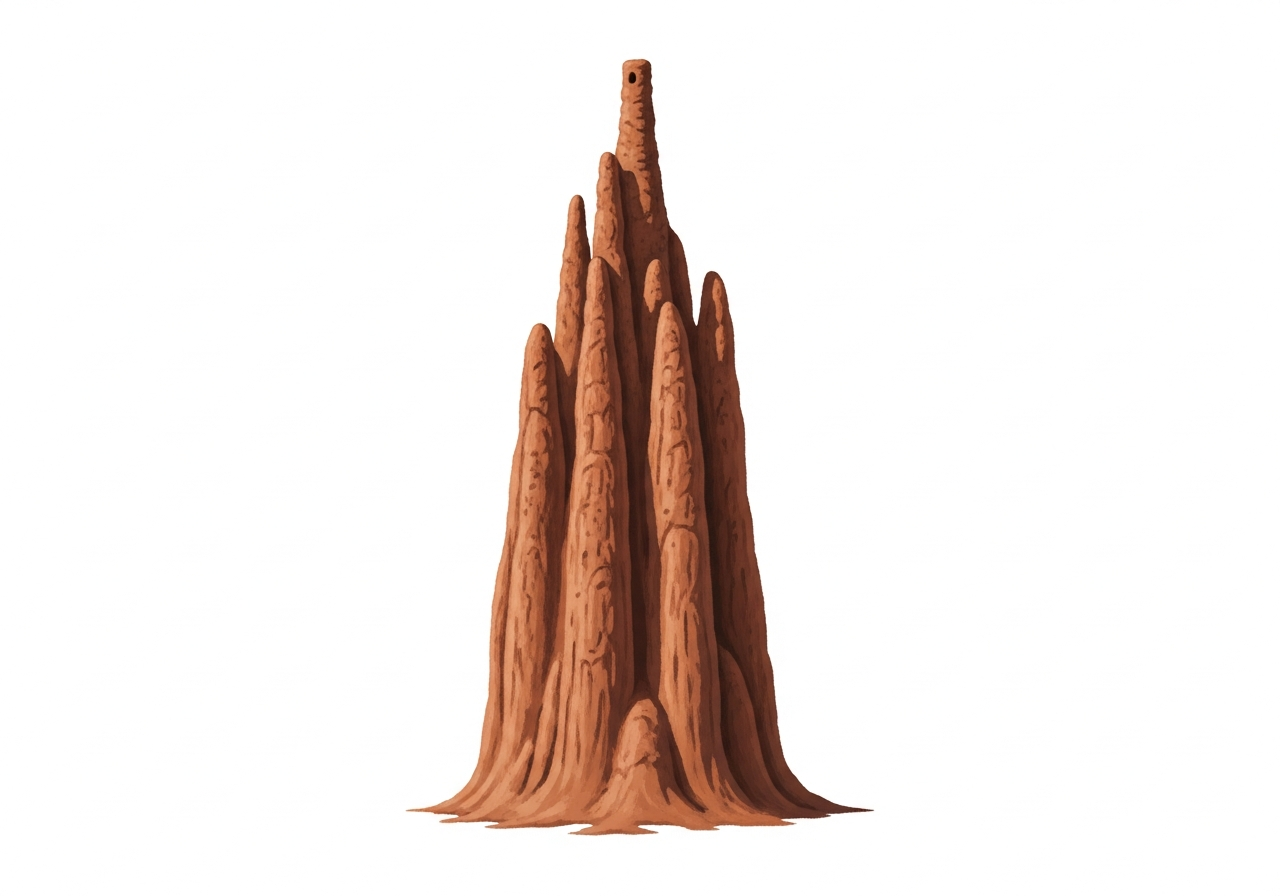
African termite (Macrotermes michaelseni)
Where you might see it
Termites are not found in the UK, but you'll find their extraordinary towers all across Africa — some more than three metres tall and built by insects smaller than your little finger. Think of how remarkable that is: millions of tiny creatures, none of them in charge, building something as tall as a room and cleverer than most modern buildings.
Nature's problem
Termites need to keep their underground nest at almost exactly 31 degrees Celsius at all times — not too hot, not too cold — to keep their fungus gardens and their queen healthy. But in Zimbabwe, where these termites live, the outside temperature swings from near freezing at night to scorching hot in the afternoon.
Nature's solution
The mound is riddled with a network of tunnels and chimneys. As the termites' bodies warm the air inside, that warm air rises and escapes through vents at the top, drawing in cooler fresh air from below. The thick earthen walls soak up heat during the day and release it slowly at night, acting like a giant storage heater in reverse. The result is a near-constant temperature inside — no fans, no electricity, no air conditioning needed.
What people made
In 1996, an architect named Mick Pearce used these same ideas to design a large shopping centre and office block in Harare, Zimbabwe — the Eastgate Centre. Thick concrete walls and floors soak up the day's heat; ducts at floor level and chimneys in the roof drive fresh air through the building all day and night. The Eastgate Centre uses up to a third less energy than comparable buildings nearby, saving millions of pounds in electricity over the years.
Try this
On a sunny day, press your hand against a brick wall in the morning and again in the late afternoon. What do you notice? The bricks have been storing the sun's heat all day — just like the termite mound. Come back in the evening to feel the wall releasing it.
Curriculum links
States of matter — how temperature changes affect materials and the role of heat transfer
The termite mound maintains a near-constant internal temperature despite extreme daily swings outside — a compelling, animal-built example of insulation and heat transfer that anchors Year 4 States of Matter study.
Explore this on the site: Year 4: States of matter
Living things and their habitats — how animals modify their environment to survive
African termites engineer their own climate-controlled habitat, demonstrating that animals do not simply adapt to their environment but can reshape it — a high-level concept ideal for Year 6 enrichment.
Explore this on the site: Year 6: Living things and their habitats
Human and physical geography — climate zones, Africa, and sustainable development
The Eastgate Centre in Harare uses termite-mound principles to cool a building without air conditioning in a hot climate, linking geographical knowledge of Africa and climate zones directly to sustainable architecture.
Explore this on the site: Key Stage 2: Geography
Design — sustainable design solutions inspired by natural structures
The Eastgate Centre's passive cooling system — no air conditioning, lower energy use — gives pupils a clear, real-world example of how copying a natural structure produces a sustainable and innovative building design.