The shark skin that stops germs spreading
Shortfin mako shark (Isurus oxyrinchus) and related species
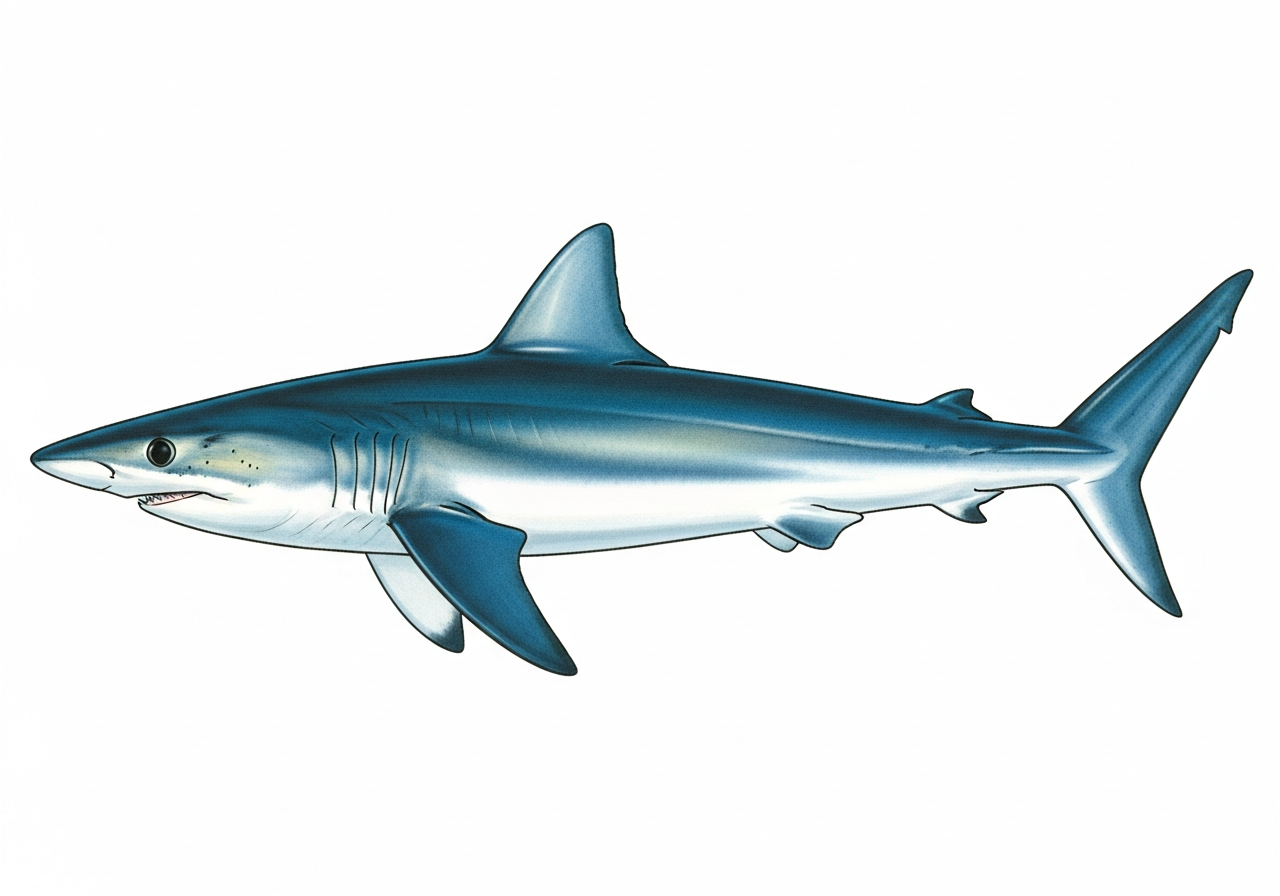
Where you might see it
Sharks are not found in UK rivers, but several species — including blue sharks and basking sharks — swim in British coastal waters. You're most likely to see a basking shark off the coasts of Cornwall, Scotland, or the Isle of Man in summer. If you've ever stroked a dried piece of sharkskin, you'll have felt that it's rough like sandpaper in one direction, because of thousands of tiny tooth-like scales all pointing the same way.
Nature's problem
A shark needs to slip through the water as quickly and efficiently as possible to catch prey — but it also lives in an ocean full of bacteria that could cause infections. How does it stay both fast and healthy?
Nature's solution
Shark skin is covered in thousands of tiny ridged scales, each shaped a bit like a small tooth. These ridges run along the direction the shark swims, which helps reduce the drag of the water. But here's the clever extra trick: the ridges also make it very hard for bacteria to find a flat place to grip onto and settle. The germs simply can't get a foothold — no chemicals needed, just the shape of the surface.
What people made
Scientists copied the shark's ridged pattern to make a film called Sharklet. It has millions of tiny diamond-shaped ridges — much too small to see with the naked eye. In laboratory tests, up to 99% fewer dangerous bacteria, including the hospital superbug MRSA, were able to grow on Sharklet surfaces compared with plain surfaces. Hospitals are already using Sharklet film on surfaces and medical equipment. Because no chemicals are involved, bacteria can't develop resistance to it — unlike antibiotics. Elite swimmers have even used sharkskin-inspired swimsuits to move faster through the water.
Try this
Look at two surfaces: a smooth piece of card and a piece of corrugated cardboard. Now imagine you're a tiny bacterium trying to settle down and build a home. Which surface would be easier to grip onto? Why might lots of ridges and bumps make it harder for bacteria to stick?
Curriculum links
Properties and changes of materials — how surface structure can change material behaviour
Sharklet shows that tiny ridges on a surface — not chemicals — can stop bacteria sticking, helping pupils understand that material properties depend on structure and not just chemical composition.
Animals including humans — microorganisms and health
Sharklet's ability to prevent harmful bacteria such as MRSA from colonising surfaces without using antibiotics is a real-world hook for discussing microorganisms, disease, and why antibiotic resistance matters.
Forces — drag reduction in water, streamlining
Shark-skin riblets reduce friction drag in water — the same riblet geometry that reduces bacterial adhesion also reduces the force water exerts on a moving shark, linking animal adaptation to forces.
Evolution and inheritance — adaptations that aid survival
The dermal denticles of sharks serve two purposes simultaneously — reducing drag and preventing bacteria from anchoring — illustrating how a single evolved structure can confer multiple survival advantages.
Explore this on the site: Year 6: Evolution and inheritance