The lotus leaf that never gets dirty
Sacred lotus (Nelumbo nucifera)
Where you might see it
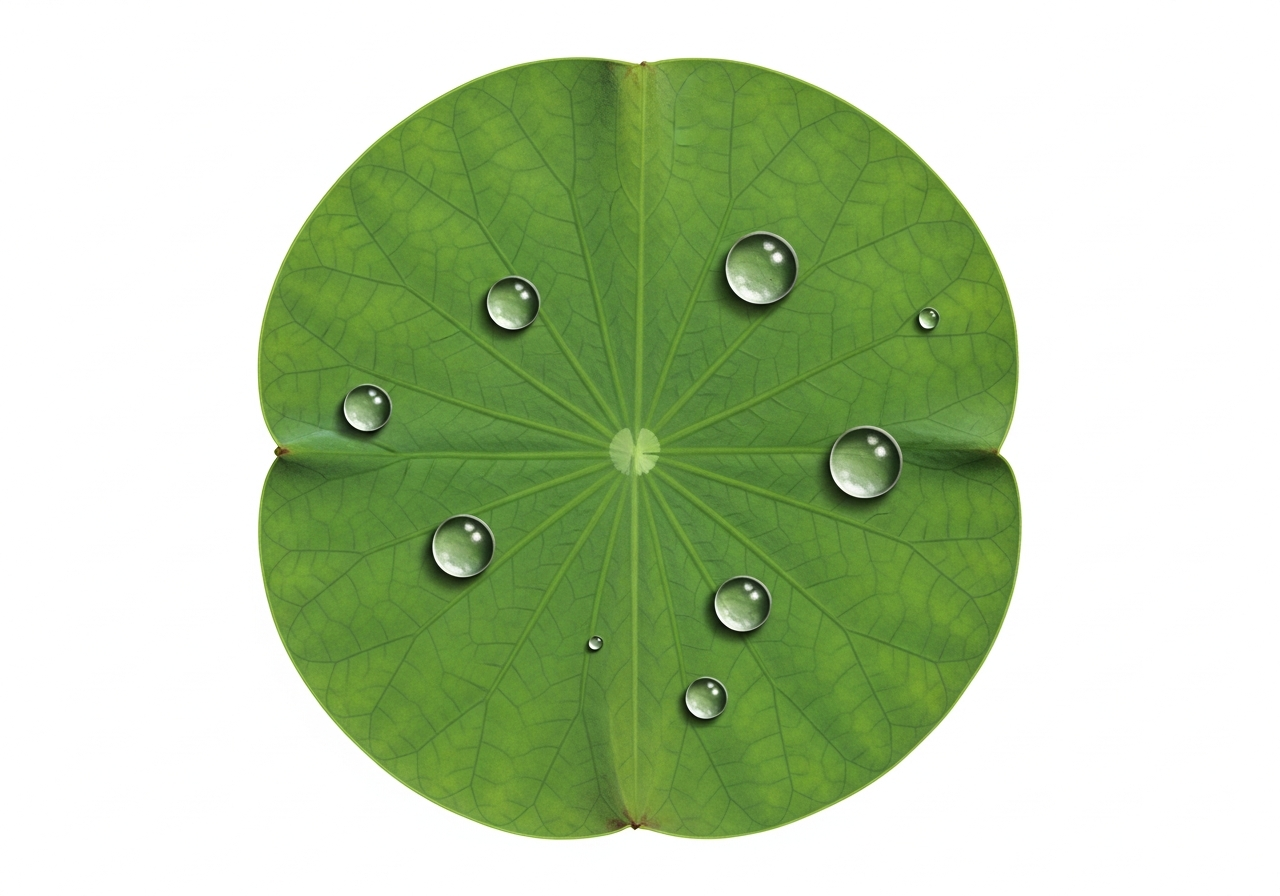
Lotus flowers grow in ponds and water gardens — you might spot them in a botanical garden or garden centre. They rise out of muddy water yet their leaves always look perfectly clean. You can also see a similar trick on the leaves of your garden nasturtiums or a cabbage — watch how water rolls off in perfect silver balls.
Nature's problem
The lotus plant lives in muddy ponds. Its leaves ought to be permanently covered in dirt, which would block sunlight and stop the plant making food. Getting dirty could slowly kill it.
Nature's solution
Look very closely at a lotus leaf and you'll see it's covered in tiny, tiny bumps — too small to see without a microscope. These bumps are coated in wax. When a water droplet lands, it can only rest on the very tips of the bumps, so it rolls off instantly, taking any dust and mud with it. The leaf cleans itself every time it rains, without the plant doing a thing.
What people made
A German scientist noticed this trick and worked out how to make paint that does the same thing. Lotusan paint — used on the outside of buildings — has a rough, waxy surface. Rain rolls off the walls and carries the dirt away, so the building stays clean for years without being washed. The same idea is used in self-cleaning windows and on solar panels — where keeping clean means making more electricity.
Try this
Find a fresh cabbage leaf or a nasturtium leaf in the garden. Drip some water onto it. What shape does the water make? Now try the same on a plain piece of paper. What's different, and why?
Curriculum links
Properties and changes of materials — comparing properties of materials including their interaction with water
The lotus leaf's waxy micro-bumps make water bead and roll off, providing a concrete, observable introduction to water-repelling materials and why surface texture affects how water behaves.
States of matter — properties of liquids and how liquids behave on surfaces
Observing water drops beading on a lotus-effect surface illustrates how surface properties affect liquid behaviour — a hands-on hook for exploring the properties of liquids in Year 4.
Explore this on the site: Year 4: States of matter
Design — selecting appropriate materials for a function
Lotusan self-cleaning paint shows pupils how understanding a material's surface structure at a microscopic level informs better product design — a real example of material selection solving a practical problem.
Evolution and inheritance — adaptation and survival
The lotus leaf's self-cleaning surface is an adaptation that keeps the leaf free of fungi and dirt in muddy water, helping pupils see how plant structures can be shaped by natural selection for survival.
Explore this on the site: Year 6: Evolution and inheritance