The kingfisher and the bullet train
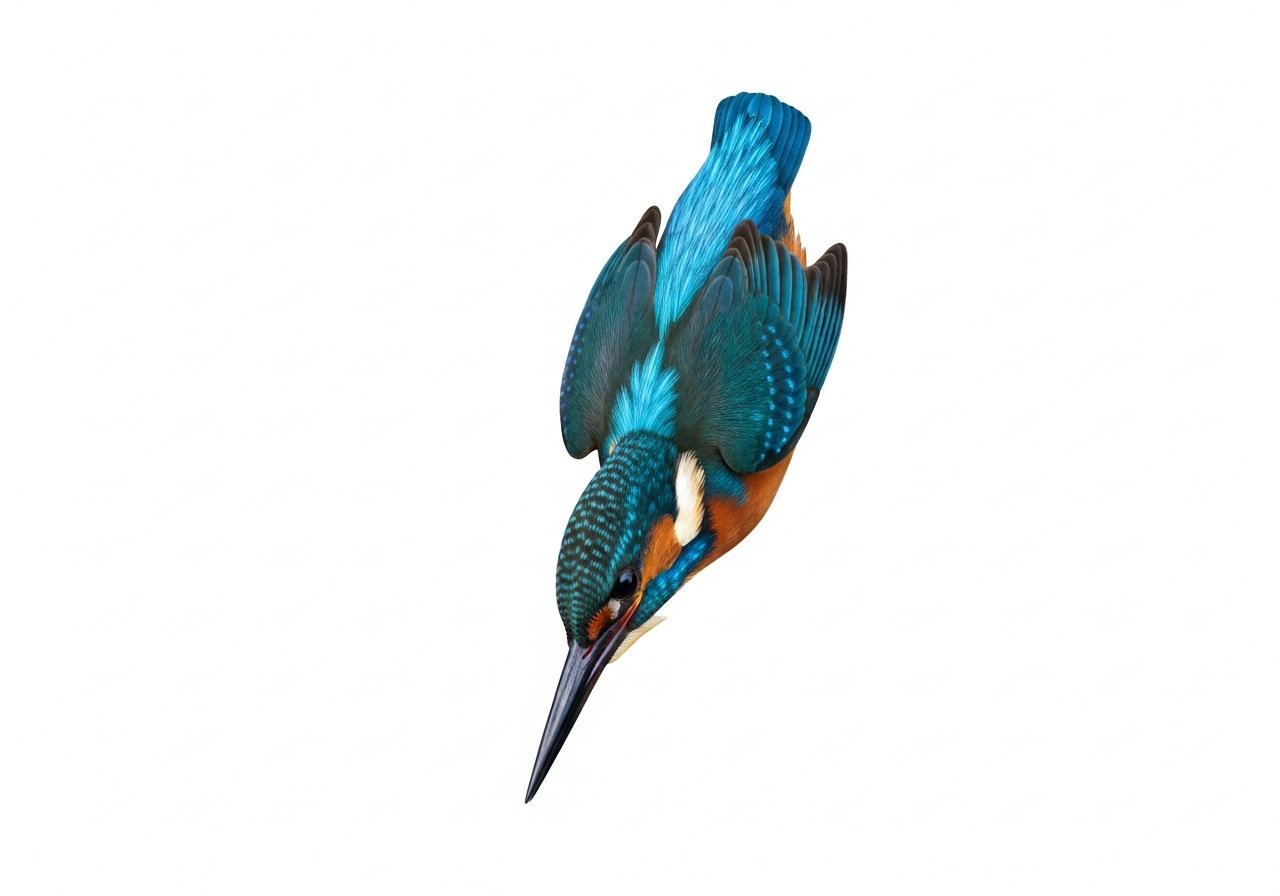
Common kingfisher (Alcedo atthis)
Where you might see it
A sudden flash of electric blue darting low over a river or canal — kingfishers live all across the UK wherever the water is slow and clean. Look for them on riverbanks and canal towpaths, especially in autumn and winter.
Nature's problem
To catch a fish, a kingfisher has to dive straight from the air into the water. But hitting water usually makes a big splash — and a splash warns the fish, which darts away.
Nature's solution
The kingfisher's long, pointed beak is shaped so that it slips from the air into the water almost without a splash. The fish never sees it coming.
What people made
In Japan, an engineer who loved birdwatching was trying to fix a high-speed 'bullet train' that made a loud BANG every time it shot out of a tunnel. He gave the train a long, pointed nose shaped just like a kingfisher's beak — and the bang disappeared. The train became faster and quieter too.
Try this
Fill a sink with water. Drop in a round pebble, then drop a pencil in point-first. Which one makes the bigger splash? Why might a long, pointed shape be better for diving?
Curriculum links
Forces — air resistance, water resistance, and streamlining
The kingfisher's tapered beak is a vivid, real-world example of how a streamlined shape reduces resistance when moving from air into water — ideal for introducing forces and drag in Year 5.
Design — evaluate and improve existing products using learning from nature
Engineers studied the kingfisher's beak and redesigned the bullet-train nose, demonstrating the DT cycle of evaluating a problem, learning from nature, and iterating a design to improve performance.
Animals including humans — animal adaptations and habitats
The kingfisher's beak is an adaptation that allows it to dive from air into water with minimal splash — a clear example of how body structures are shaped by the environment and feeding behaviour.
Explore this on the site: Year 4: Animals, including humans
Writing — non-chronological reports and explanatory texts
The kingfisher-to-bullet-train story is a compelling narrative for writing an explanatory or persuasive text about biomimicry, giving pupils a real cause-and-effect example to explain and argue from.