The beetle that makes light without heat
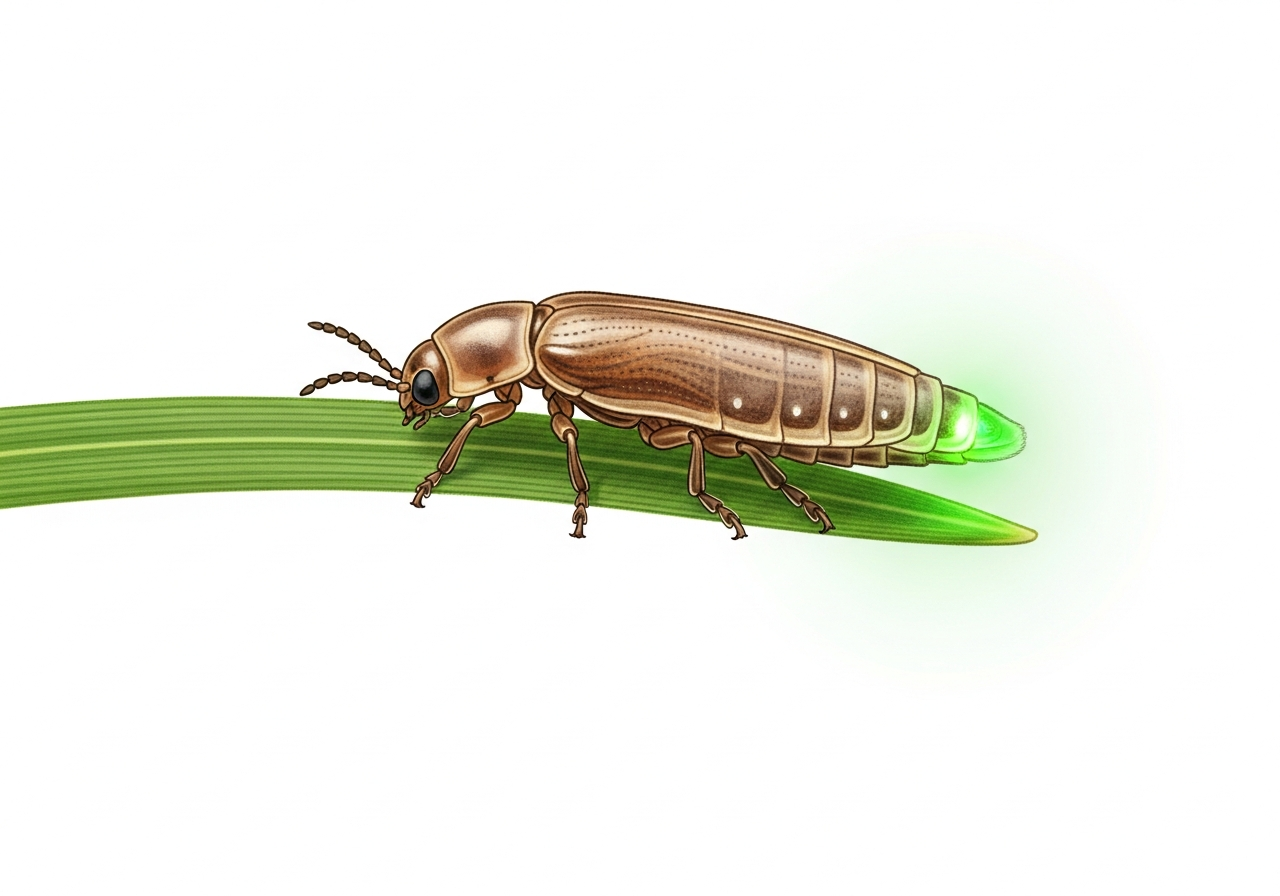
Glow-worm (Lampyris noctiluca) — which is really a beetle, not a worm
Where you might see it
On warm, still nights in June and July, on grassy banks and hedge bottoms in southern England. Low to the ground, a female glow-worm shines a steady greenish light from the tip of her tail to call a flying male down to her. You need a really dark spot and a few minutes for your eyes to adjust — no torch.
Nature's problem
An ordinary light, like an old-fashioned bulb, throws away most of its energy as heat — touch one and it is hot. A tiny beetle could never make light that way: the heat would harm her, and she has nowhere near enough energy to spare.
Nature's solution
The glow-worm makes 'cold light'. Inside the tip of her body, a chemical called luciferin reacts with oxygen and gives off light with almost no heat at all — nearly every scrap of energy becomes light instead of warmth. It is one of the most efficient lights anywhere in nature.
What people made
People make cold light too, in the glow sticks you bend and snap at fairs and on bonfire night. Snapping the stick mixes two chemicals that react and shine — no battery, no heat, just like the glow-worm. We did not copy the beetle to invent them; chemists found their own glowing chemicals. But nature had been lighting up summer hedgerows with cold light for millions of years before the very first glow stick was ever cracked.
Try this
On a warm, dark night in July, look along grassy banks and hedge bottoms in the south of England for a tiny green light close to the ground — a female glow-worm. Hold a snapped glow stick beside a warm yellow torch or lamp: feel how the glow stick stays cool while a bulb gets hot. That is the glow-worm's trick.
Curriculum links
Light — sources that make their own light
A living light source: the glow-worm makes her own light rather than reflecting it, a vivid example when sorting things that give out light from things that only reflect it.
Explore this on the site: Year 3: Light
Living things and their habitats — life cycles and reproduction
The female's glow is a signal to attract a mate, connecting a striking adaptation to how living things find each other and reproduce.
Explore this on the site: Year 5: Living things and their habitats