The fish that powered the very first battery
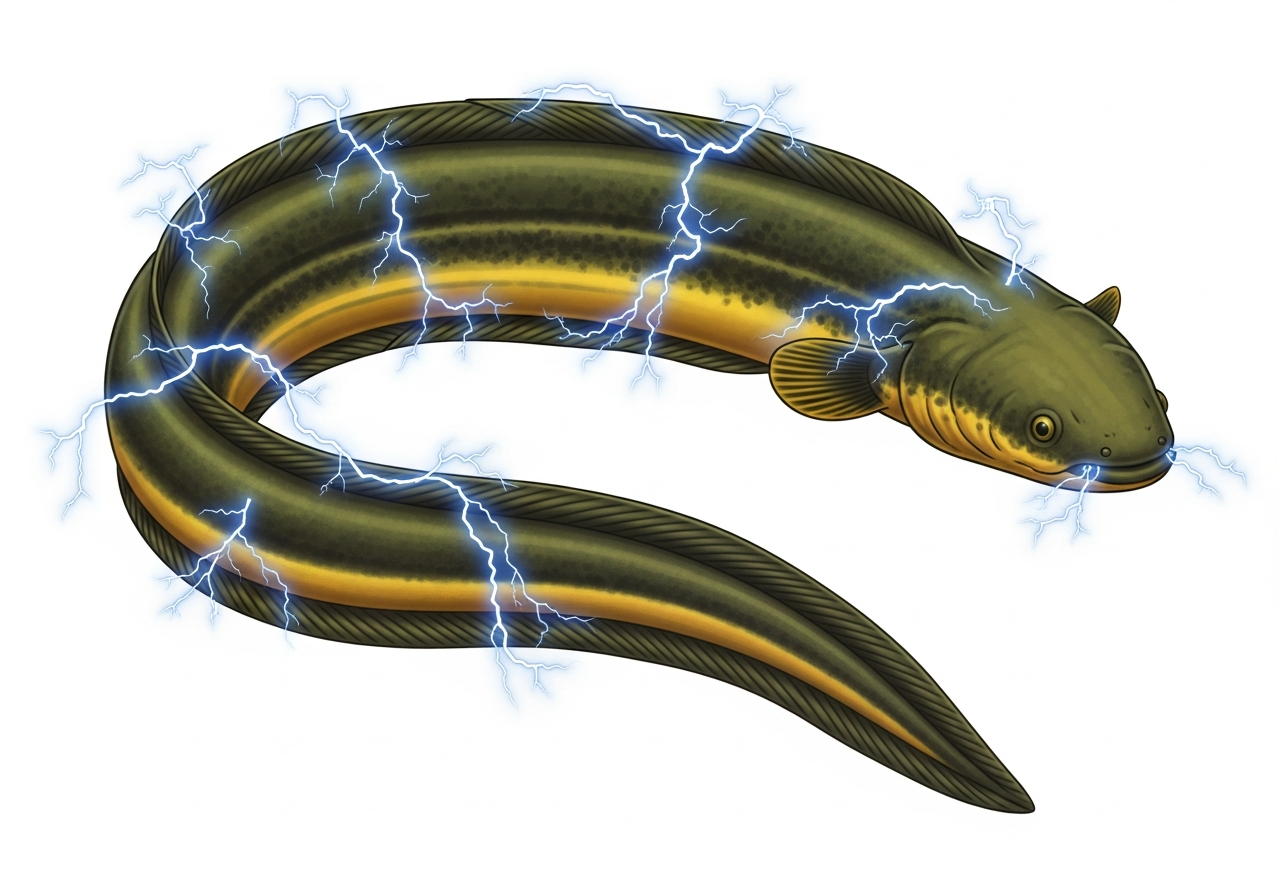
Electric eel (Electrophorus electricus)
Where you might see it
Not in Britain — the electric eel lives in the slow, muddy rivers and swamps of South America, where the water is too murky to see far. You can meet one, though, in the tanks of many large aquariums.
Nature's problem
In dark, muddy water you cannot rely on your eyes to find a meal or fight off an attacker. The electric eel needed another way to reach out and touch the world around it.
Nature's solution
Most of the eel's long body is packed with special cells stacked in their thousands, one on top of another, like a tall pile of tiny flat batteries. Each cell makes only a feeble amount of electricity, but stacked together and fired at once they add up to a powerful shock — enough to stun a fish or warn off a much bigger animal.
What people made
This one really was copied from nature, on purpose. Around the year 1800, the Italian scientist Alessandro Volta was puzzling over how electric fish made their shock. He built a tall stack of metal discs separated by damp cardboard — deliberately copying the stacked layers inside the fish — and it gave out a steady flow of electricity. It was the world's first battery, and he even called it an 'artificial electric organ'. Every battery since, in your torch, your toys and your phone, is a grandchild of that fishy idea.
Try this
Make a battery from a lemon. Push a copper coin into one side and a galvanised (zinc-coated) nail into the other, then touch both to a small bulb or a tongue-tingle. Now join two or three lemons in a row — more 'cells' stacked together make more power, exactly the way the eel stacks its cells.
Curriculum links
Electricity — cells, batteries and simple circuits
Brings the cell or battery in a circuit to life: the eel is a living stack of cells, a memorable way in to where the electricity in a circuit comes from.
Explore this on the site: Year 4: Electricity
Electricity — voltage and the number of cells
The eel adds many small cells together to make a bigger shock — exactly the Year 6 idea that more cells, or higher voltage, give a stronger effect such as a brighter lamp.