The bee that pulls pollen with static
Honeybee (Apis mellifera) and bumblebees (Bombus species)
Where you might see it
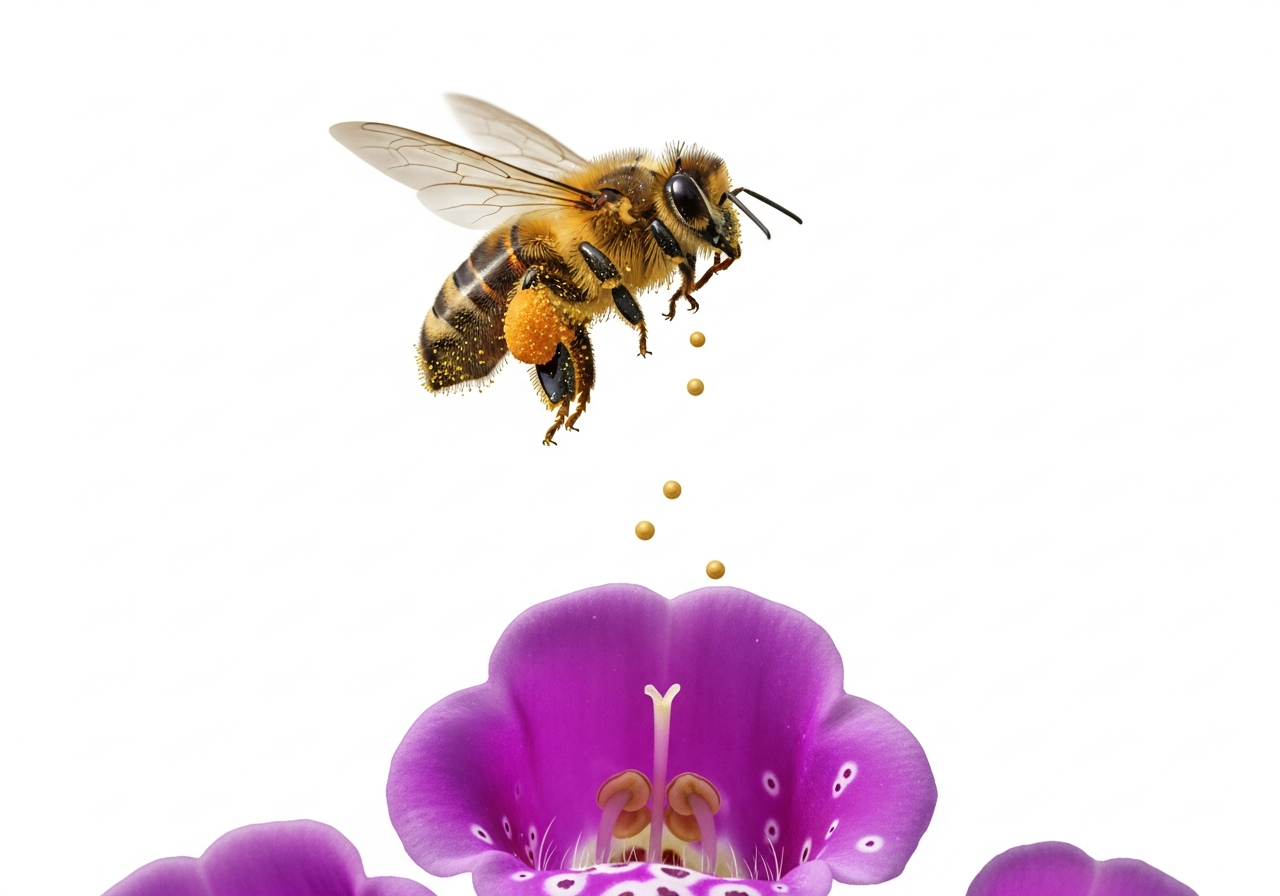
Any sunny British garden in summer. Watch a bee bumble from flower to flower over the lavender, the foxgloves or the bramble blossom, and look at how it lands already dusted with yellow pollen. By the time it flies home, its furry body and the little baskets on its back legs are heavy with it.
Nature's problem
A flower's pollen is a fine, light dust. A bee needs to gather as much of it as possible, as fast as possible — but loose dust blows away on the breeze and is hard to collect from a flower you are only just landing on.
Nature's solution
As a bee flies, its tiny hairs rub against the air and build up a small positive charge of static electricity — the very same kind you make by rubbing a balloon on a woolly jumper. Flowers, rooted to the damp ground, carry a slightly negative charge. Because opposite charges pull towards each other, the pollen actually leaps up through the air onto the bee before it has even touched the flower, and clings to its hairy body. Cleverer still, a flower's charge changes for a little while after a bee has visited — so the next bee can sense it has just been emptied and not waste time landing.
What people made
People use exactly the same trick to paint things — but we worked it out entirely on our own, long before anyone knew bees did it. In an electrostatic sprayer, the paint droplets are given an electric charge and the object being painted is given the opposite charge. The paint is pulled towards the object and even wraps around to the back, with almost none wasted. Factories paint cars and bicycles this way, and farmers use charged sprays so the droplets cling to every side of a leaf. Nobody copied the bee: engineers invented electric spray-painting in the 1940s, and scientists only discovered the bee's static-pollen trick in 2013. The bee simply got there about a hundred million years first.
Try this
Rub a balloon on a woolly jumper for a few seconds, then hold it just above some tiny scraps of torn-up tissue paper or a sprinkle of dried herbs. Watch the little bits jump UP onto the balloon without being touched. That leap is the same invisible pull a bee uses to lift pollen off a flower.
Curriculum links
Electricity — static electricity and how charges attract
A living, watchable example of static attraction: the bee builds a charge like a rubbed balloon and the opposite-charged pollen jumps to it, bringing the idea of charges off the page and into the garden.
Explore this on the site: Year 4: Electricity
Plants — the role of flowers in the life cycle, including pollination
Shows pollination from the bee's side: how a bee gathers and carries pollen between flowers, and why flowers and bees fit together so well.
Explore this on the site: Year 3: Plants